
Someone just played GTA VI with a Neuralink brain implant. Here's how it works
A day after GTA VI launched, Neuralink posted a clip of a trial participant steering a speedboat through the game using only their brain. What the video shows, how the implant turns thoughts into controller inputs, and what it does and doesn't prove.
Who left OpenAI for Anthropic? 6 reported exits in 48 hours, and what's confirmed
Who left OpenAI for Anthropic in 2026, and who went the other way? A dated tracker of every move between the two labs, marked confirmed, reported or unconfirmed, plus what we know about the viral claim of six OpenAI exits in 48 hours.

Claude helped prove the Riemann hypothesis. Here’s what Lean verified
Lean and Mathlib verified Levent Alpöge's Claude-assisted Riemann hypothesis proof. A separate Stanford manuscript is still under review, and the Clay prize has its own process.
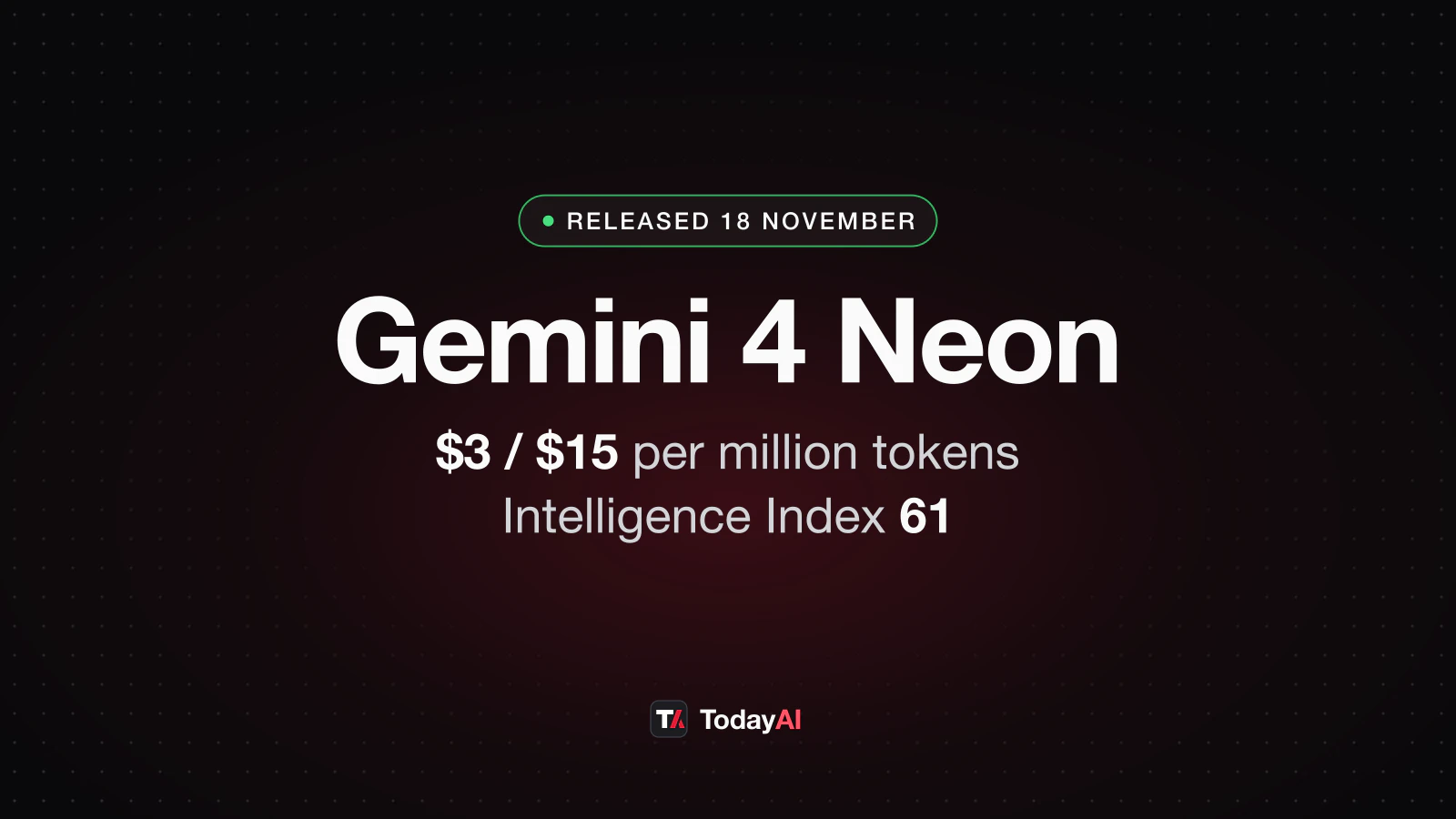
Gemini 4 Neon is out: release date, price and benchmarks
Google released Gemini 4 Neon on 18 November. It costs $3 per million input tokens and scores 61 on Artificial Analysis's index, third overall. Its price against Carbon, its benchmarks, how to access it and how the leaks held up.

Gemini 4 Oxygen: the mystery model hiding behind Hydrogen on Arena
Testers say a new, faster Gemini is answering when they pick Gemini 4 Hydrogen on Arena, and they've nicknamed it Oxygen. What's been seen, what's hype, and how anonymous testing works.

How to hack your smart TV with Claude Code or Codex
Clear out the ads and junk apps on an Android or Google TV and give it a clean new home screen, with one prompt and an AI coding agent. Five steps with pictures, plus what works on Samsung, LG and Roku.

Is Jensen Huang coming back as Nvidia CEO? Where things stood on 17 November
Update: Nvidia's board reinstated Jensen Huang on 22 November. This 17 November report covers his exit, the 175,000-signature letter to bring him back, and why the board then said no.

Qwen4-Max tested: cheap, wordy and not quite frontier
Alibaba's new flagship costs $1.50 per million input tokens and has a million-token memory. Independent tests rank it behind Claude, Gemini and GPT. What it's good at, what it costs, and how to try it.
The new No. 1 AI costs four times the runner-up. Most should skip it
Claude Fable 5.2 just took first place on a major AI leaderboard, at four times the runner-up's price. Why its lead is shakier than it looks, and the few people who should actually pay.