Google released Gemini 4 Hydrogen, its new fast model, on 12 November. Within two days, people testing it on Arena noticed something odd: sometimes "Hydrogen" seemed to be a different model altogether.
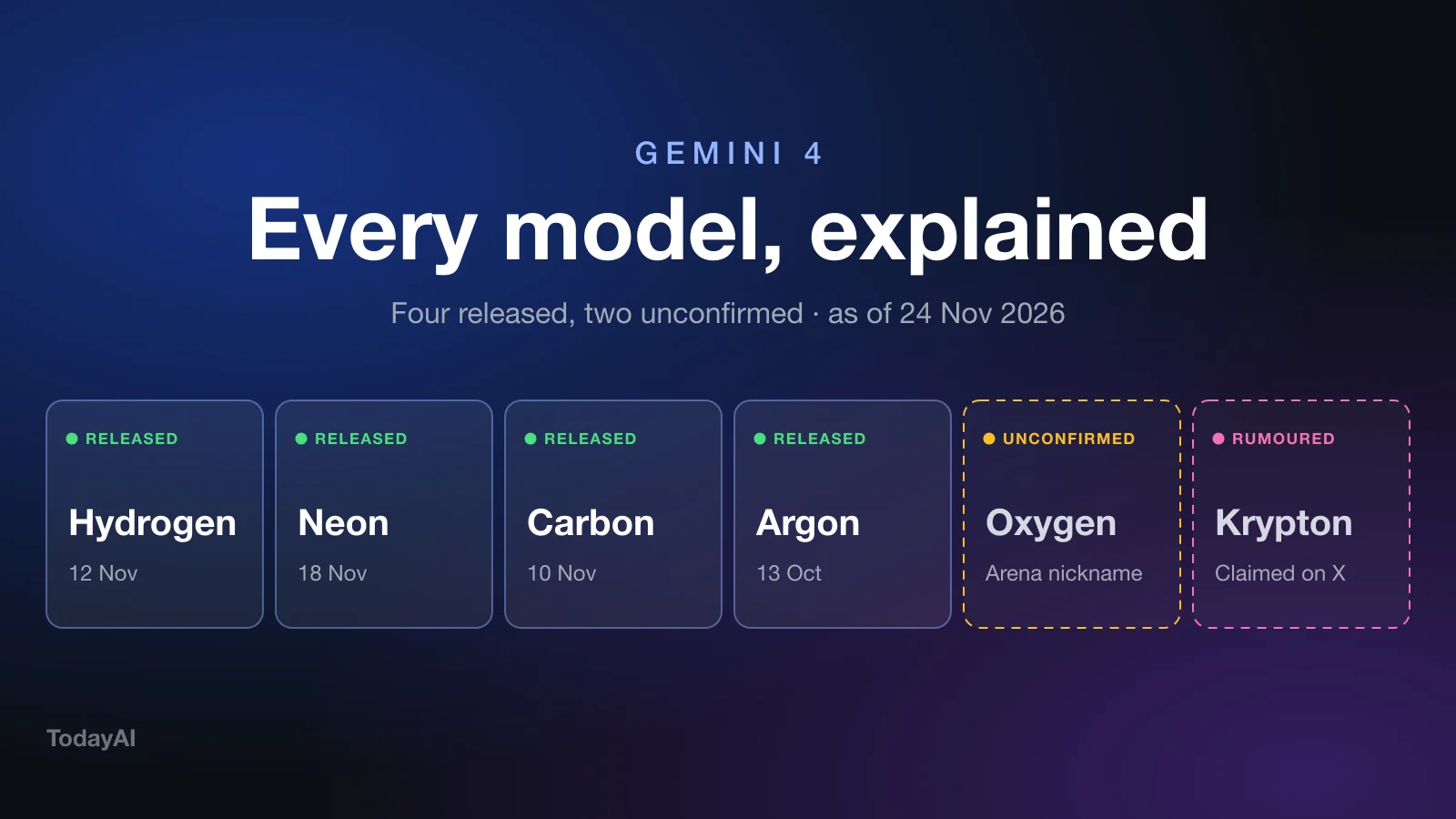
Every Gemini 4 model, released and rumoured, in one place: Gemini 4 models explained.
They've given that model a name, Oxygen. Here's what's been seen, and what's still guesswork.
What testers noticed
Arena (it was called LMArena until January) is a public website where you type a prompt, two anonymous AI models answer, and you vote for the better one. It's also where labs quietly try out models before launch.
According to a timeline compiled by kie.ai, a benchmark account called LuminaBench spotted on 14 November that the Hydrogen entry seemed to be "routing to something" else. On 15 November another X user named it "a new Flash model: Gemini 4 Oxygen". We couldn't find that original post, or any evidence for the name.
The most widely shared description came the same day from developer Pankaj Kumar: "A new Flash-tier model… upgrade over Hydrogen. Its available on Arena under 'gemini-4-hydrogen'… better design taste… colors and overall design are really good… decent upgrade in 3D and SVG, not huge."
"Flash" is the name Google has used for its fast, cheaper Gemini models. SVG is a kind of image drawn with code rather than pixels, so it's a popular way to test how well a model plans a picture.
What's been claimed about it
The praise is almost all about looks:
- Colour and design. Web pages and graphics with better palettes and layouts than Hydrogen's.
- 3D scenes and SVG drawings. Described as a real step up, but "not huge".
- Creative demos. A video roundup shows scenes such as a cable car over mist and a blocky "voxel" garden. We couldn't trace those clips to their original posts, so we can't vouch for them.
None of this tells you whether Oxygen is more accurate, better at reasoning or faster. Those are what the standard tests measure, and there aren't any results yet.
How anonymous testing on Arena works
This matters for reading the hype. Arena's FAQ explains that labs can offer unreleased models for testing. They show up in head-to-head "battle" mode under codenames, and one codename can cover several versions. You only learn which models answered after you vote, and only those anonymous votes count towards the scores.
So it's entirely possible for a new version to appear behind an existing name like Hydrogen while Google tries it out. It also means the posts you see are the best results someone chose to share. A model can look brilliant in three screenshots and ordinary across a thousand votes.
A model only appears on Arena's leaderboard under its real name once it's officially released. Until then, "Oxygen" is the testers' label, not Google's.
Is it Krypton? Is it Neon?
There's been a lot of mixing up of names this month, so here's where they stand:
- Krypton is a different rumoured Google model, trending since 8 November. On 14 November, one tester called the mystery Arena model Krypton. The person who first used the Krypton name replied that Krypton isn't on Arena. The model was later relabelled Oxygen. We found no evidence that Oxygen is a "distilled" Krypton, meaning a smaller model trained to copy a bigger one.
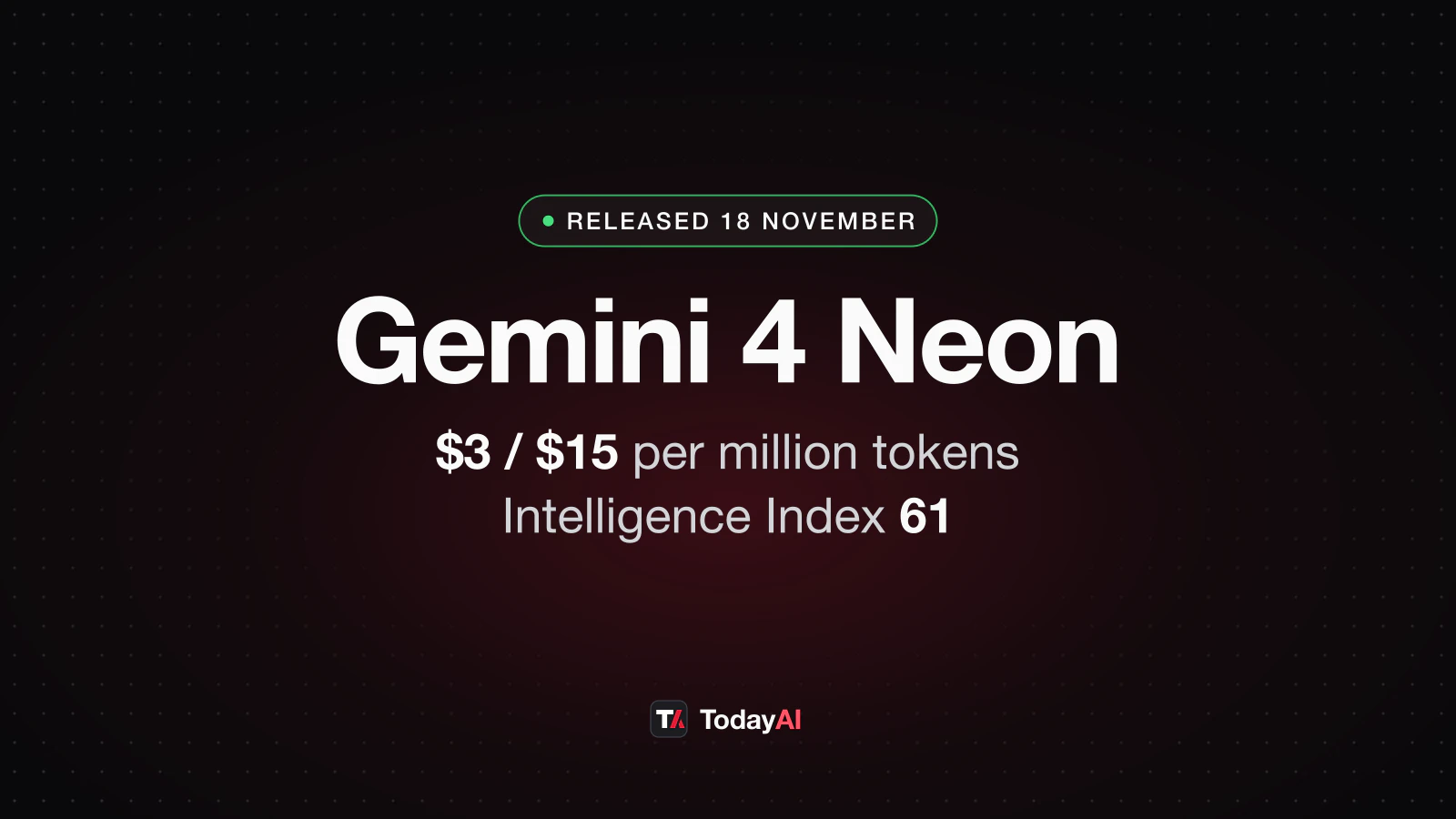
- Neon is a name found in the code of the Gemini website on 16 November. We've covered it here. Nobody has linked it to Oxygen with evidence.
The video claims that Krypton beat Claude Fable 5.2 at drawing a person as an SVG. We couldn't find that comparison, and other leakers say Fable still leads.
Where it would sit in Google's lineup
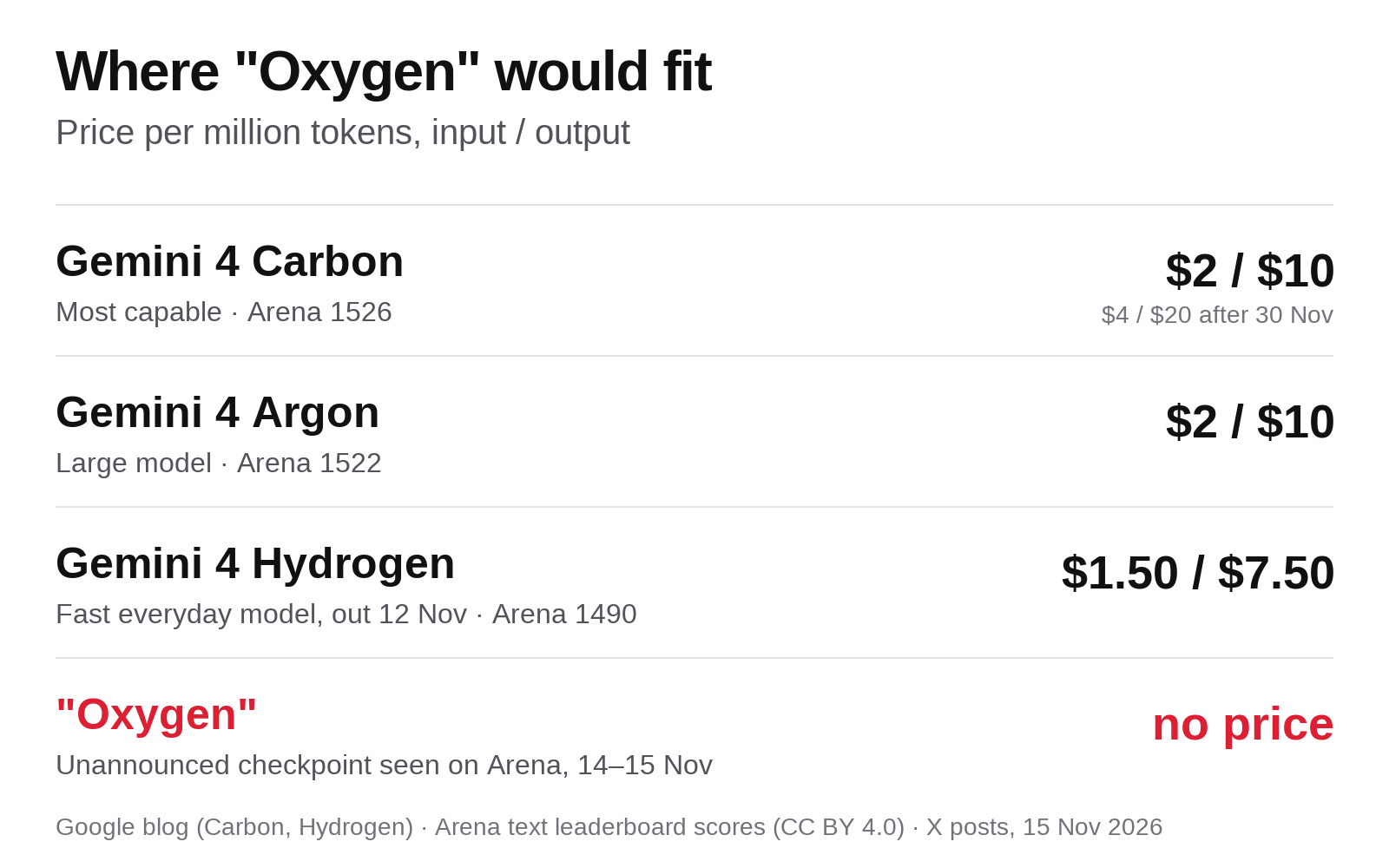
If Oxygen is a fast model, its job would be to replace or sit alongside Hydrogen. Here's what's real today:
- Carbon is Google's most capable model. It's $2 per million input tokens and $10 per million output tokens until 30 November, then double that.
- Argon is a large model announced on 30 September, also starting at $2 and $10.
- Hydrogen is $1.50 in and $7.50 out, with the same price across its full million-token context window.
Fast models matter more than they sound. In Google's Antigravity coding tool, the Orchestrator mode has Carbon plan the work while Hydrogen writes the code. A better fast model makes that whole setup better. That's why a "Flash upgrade" gets people excited, and why it would add pressure on OpenAI, whose GPT-6.2 Astra is still waiting for launch.
What to do
If you need a quick, cheap Gemini today, use Hydrogen. It's real, priced and documented. You can compare it with the alternatives on our compare page.
If you want to see Oxygen for yourself, you can try battle mode on Arena. You might get it, and you won't know until you vote. Just remember that what you see there is a test version that could change, or never ship under that name.
When Google gives it an official name, a model card and a price, we'll know what Oxygen really is.