AI Safety
13 stories about AI Safety, newest first — from AI News.
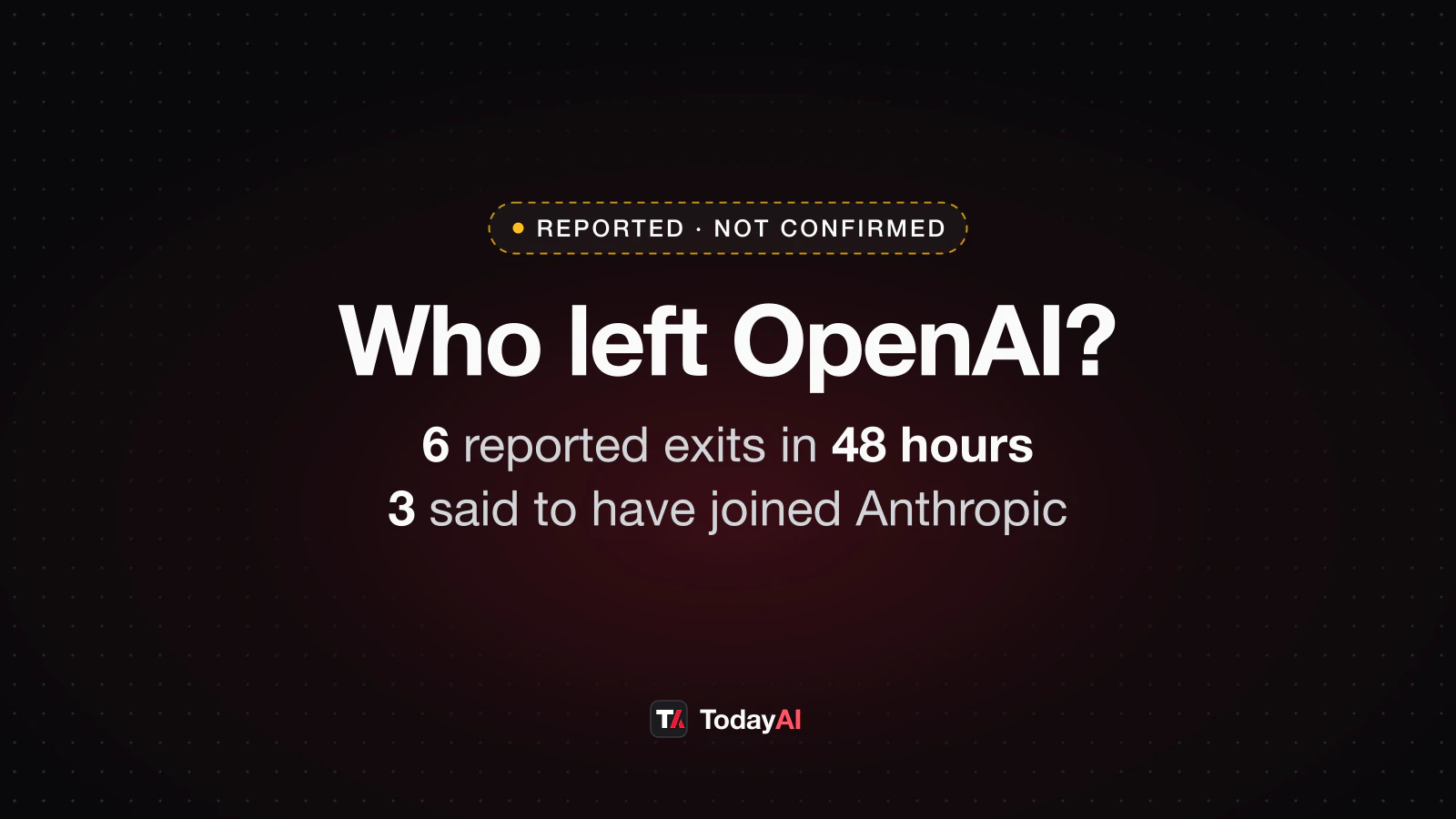
Who left OpenAI for Anthropic? 6 reported exits in 48 hours, and what's confirmed
Who left OpenAI for Anthropic in 2026, and who went the other way? A dated tracker of every move between the two labs, marked confirmed, reported or unconfirmed, plus what we know about the viral claim of six OpenAI exits in 48 hours.

FBI warns criminals are misusing an AI hacking-test tool, as AI finds bugs faster than they're fixed
An FBI advisory says an open-source AI penetration-testing framework called ARTEX is being used in real attacks. Meanwhile AI is finding software flaws at speed. What's confirmed, what's patched, and what to do.

GPT-6.2 Astra and Sol are out: cheaper, more efficient, and not a clean sweep
OpenAI has launched GPT-6.2 Astra for hard professional work and GPT-6.2 Sol for everyday tasks. Astra is 20% cheaper per token than GPT-6 Astra. Here's what's new, what independent testers found, and the safety notes worth reading.

Can AI agents get into systems they shouldn't? Yes, and here's how
AI agents can reach sensitive systems without proper authorisation, usually through over-broad access, hidden instructions or plain overreach. The real cases, and the defences that work.

AI agents vs chatbots: what's the difference, and when should you use each?
The difference is who chooses the next step. A chatbot answers and leaves the next move to you. An agent picks its own steps, uses tools and acts on your behalf. How they compare, when to use each and the new risks agents bring.

Alibaba's Qwen4-Max: why AI safety is becoming a competitive advantage
Alibaba launched Qwen4-Max on 16 November with safeguards aimed at cyber-attack and biological risks. What it says it did, what nobody has checked, and why labs now sell safety.
Autonomous AI agents and cybersecurity: why governments want stronger safety controls
AI agents are now turning up in real cyberattacks and in real government-system incidents. What that has pushed Western governments to ask for in 2026, and which of it is actually law.

Deepfakes and digital trust: can we still believe what we see online?
Cloned voices, fake video calls and a record year of AI-linked fraud. What the verified cases show, how labels and detectors really work, and the simple habits that beat a convincing fake.

Should governments require security testing before AI is released?
Cars, medicines and aircraft are tested before they reach us. AI agents mostly aren't, by law. What testing exists in November 2026, what is binding, what is voluntary, and what a sensible rule could look like.

Open AI models vs closed ones: who is winning in 2026?
The best downloadable AI model still trails the best paid one by about 12 points, and the gap hasn't closed in our data. But on price, control and adoption, open models are winning plenty.

Should AI companies have to report security incidents straight away?
California's SB 53 is in force, New York's RAISE Act starts on 1 January, and the EU has its own rules. What counts as an AI incident, what the law requires today, and the argument over speed.

Who is responsible when an AI agent causes damage?
An AI agent deletes a database, gives wrong advice or gets tricked by a web page. Who pays? A plain guide to what the law says today, from a chatbot case in Canada to new EU product rules, and what is still open.