The FDA has cleared Neuralink to begin LINK, a pivotal trial of its brain implant in U.S. adults with severe paralysis caused by ALS. Neuralink announced it on November 25 and says enrollment is open now. The company calls it "the first pivotal trial for an implantable brain-computer interface (BCI) in the United States." Neuralink · Digital Trends
To be clear about what this is: the FDA has allowed the study to start. It has not approved the implant for patients outside research. Neuralink's devices are still investigational. Interesting Engineering
What is the LINK trial?
According to Neuralink, LINK will "evaluate the safety and effectiveness of the Neuralink BCI system" in people with ALS-related paralysis. It looks at whether participants can control digital devices by thought, with a focus on outcomes that improve independence in daily life. It will also track long-term safety and reliability across multiple clinical sites. Neuralink
Here is what is confirmed and what isn't:
| Detail | What we know |
|---|---|
| Trial type | Pivotal study, per Neuralink |
| Who can join | U.S.-based adults with ALS and severe paralysis |
| Number of participants | Not disclosed |
| Sites | "Multiple clinical sites" in the U.S., not named |
| What it measures | Safety, effectiveness, control of digital devices, daily independence, long-term reliability |
| Follow-up | About 24 months after implantation |
| ClinicalTrials.gov listing | None found under Neuralink as of November 26 |
Neuralink · Neuralink trial page · Interesting Engineering · ClinicalTrials.gov
Neuralink hasn't released the exact primary endpoints, the enrollment target or a timeline for results.
What is a pivotal trial, and how is it different from PRIME?
Medical devices usually go through stages of testing in people. The FDA describes an early feasibility study as a small study, early in a device's development, that looks at initial safety and whether the device works as designed. Changes to the design are still expected at this stage. FDA
A pivotal study is the definitive one. The FDA describes it as the study that gathers the evidence used to judge a device's safety and effectiveness for its intended use. The device is normally at or near its final design. FDA guidance
PRIME, Neuralink's first human study, was an early feasibility study. Its ClinicalTrials.gov listing describes it as a "first-in-human early feasibility study" of the N1 Implant and the R1 robot that inserts its threads. Its primary outcomes were adverse events at 12 months. The listing shows an enrollment of 15 at Barrow Neurological Institute in Phoenix and the University of Miami. It is no longer recruiting. ClinicalTrials.gov: PRIME
In short, PRIME asked whether the implant could be placed safely and whether it worked. LINK asks whether it is safe and effective enough to support a future application to sell it, in one specific group of patients.
Separately, Neuralink registered a smaller follow-on early feasibility study, PRIME2, on November 10. It plans up to 10 participants with spinal cord injury, ALS or stroke at up to five U.S. sites. ClinicalTrials.gov: PRIME2
How many people have Neuralink implants, and what has it shown?
Neuralink says more than 30 people have been implanted in its feasibility studies in the U.S., Canada and the UK, and that they have logged "thousands of hours of real-world BCI use." Neuralink
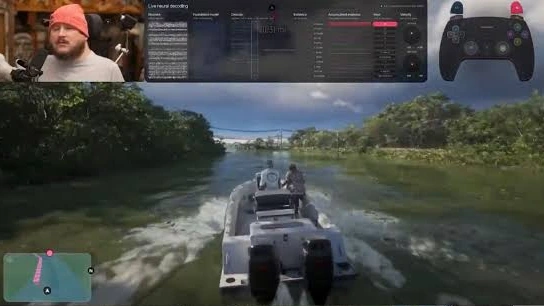
Participants move a cursor by imagining hand movements. Neuralink says they have used it for messaging, browsing, study, art and games. Earlier this month, the company posted a clip of a participant playing GTA VI, which we covered in how a Neuralink user played GTA VI. Interesting Engineering
The best-documented results come from the first participant, Noland Arbaugh. In a May 2024 update, Neuralink said he reached 8.0 bits per second on a cursor task, a speed and accuracy measure. It also said that after surgery "a number of threads retracted from the brain," which reduced performance until the team changed its software. Neuralink
These are company reports. We could not find peer-reviewed results from PRIME. That is part of why a pivotal trial matters: it should produce data the FDA will review.
Where do Synchron, Paradromics and Precision stand?
No brain-computer interface is FDA-approved for general use. Medical Daily
- Synchron received the first FDA investigational device exemption for a permanently implanted BCI and implanted its first U.S. patient in 2022. In mid-November it voluntarily paused enrollment in trials of its second-generation Stentrode after a performance issue with the lead, the cable linking the sensor to the implanted electronics. Synchron says the pause was its own decision and that it found no associated safety issue. It hasn't said when trials will restart. Medical Daily
- Paradromics got FDA approval in November 2025 for its Connect-One early feasibility study, aimed at restoring speech and computer control. The first participant, a woman with motor neuron disease, was implanted at University of Michigan Health in June 2026. Paradromics
- Precision Neuroscience received FDA 510(k) clearance in April 2025 for its Layer 7 electrode array, for implantation of up to 30 days. The clearance covers one component, for uses such as brain mapping during surgery, not its planned permanent wireless system. Precision Neuroscience
How can people with ALS apply to the LINK trial?
This section uses only Neuralink's official trial pages.
- Who can apply: Adults in the U.S. living with ALS. Neuralink's FAQ also requires being 18 or older, having limited or no use of both hands and arms, and having a consistent, reliable caregiver.
- How to apply: Fill in the online interest form through Neuralink's Patient Registry. Neuralink says it takes about 10 minutes.
- What happens next: A discussion with the study team, screening and brain imaging, confirmation of enrollment, a baseline visit, surgery, then training with the device.
- Follow-up: About 24 months of check-ins after surgery, some of them remote.
- Cost: Neuralink says there is no cost to take part. The device, surgery and study visits are provided, and travel and lodging for site visits are supported.
Neuralink trial page · Digital Trends
An ALS diagnosis does not guarantee a place. Applicants have to meet the study's criteria and pass screening. The implant is placed during brain surgery under general anesthesia, which carries real risks. It is worth discussing with a neurologist before applying. Interesting Engineering
What happens after LINK?
If the results are good, Neuralink would use them in an application asking the FDA to approve the device for sale. Neuralink hasn't said when it expects results or when it might file. Until then, the implant remains available only inside clinical trials.