When most people think of AI, they think of chatbots that write emails, summarise documents or help with homework. That is the part of AI you can see.
A lot of the most interesting work is happening somewhere else: in oceans, labs, farms, forests and museums. Here are 10 real uses of AI that rarely make the headlines, what they have actually achieved, and, where you can, how to try something similar yourself.
1. Decoding how sperm whales talk
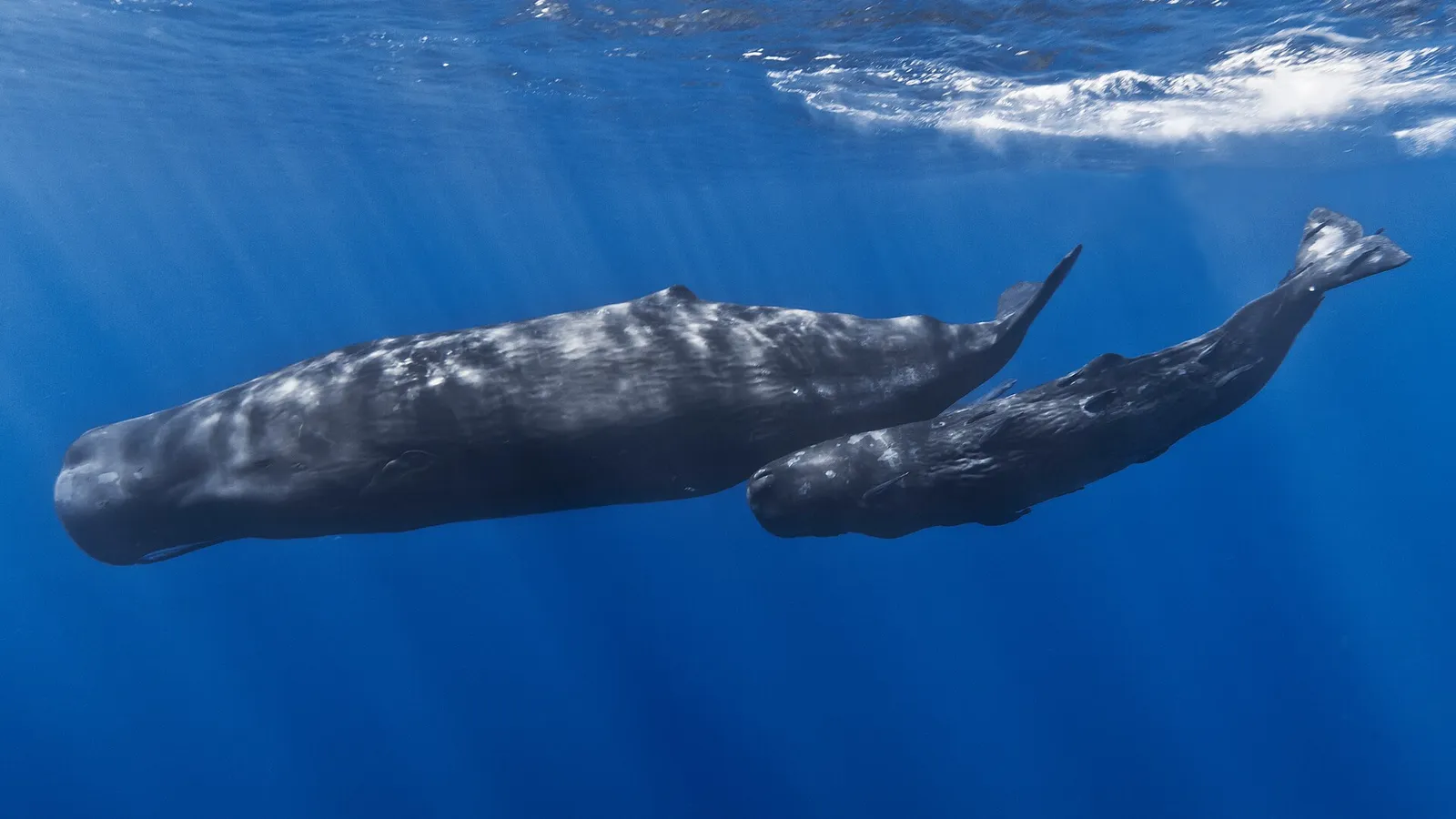
Sperm whales communicate in codas, short bursts of clicks that sound a bit like Morse code. Biologists have recorded them for decades, but nobody knew how much structure was hiding in them.
Project CETI, a nonprofit working off the Caribbean island of Dominica, is using machine learning to find out. In 2024, CETI researchers and the Dominica Sperm Whale Project published a study in Nature Communications analysing nearly 9,000 recorded codas. They found that whales vary the rhythm and tempo of codas, and sometimes add an extra click, in ways that combine like building blocks. The team called it a "sperm whale phonetic alphabet".
That doesn't mean we can translate whale yet. Nobody knows what the codas mean. But it suggests whale communication is far richer than once thought. A separate nonprofit, the Earth Species Project, is building AI models to study communication across many species, from birds to primates.
Why it matters: understanding animals better can change how we protect them, from shipping lanes to fishing rules.
Try it yourself: the free Merlin Bird ID app from the Cornell Lab of Ornithology uses AI to name birds from their song in real time. Open it in a park and hold up your phone.
2. Reading scrolls burnt by Vesuvius
When Mount Vesuvius erupted in 79 AD, it buried a Roman villa at Herculaneum and carbonised its library. Hundreds of papyrus scrolls survived as lumps of charcoal. Try to unroll one and it crumbles.
The Vesuvius Challenge, set up by computer scientist Brent Seales of the University of Kentucky with tech investors Nat Friedman and Daniel Gross, offered prize money to anyone who could read the scrolls without opening them. The scrolls were scanned with high-resolution X-rays, and contestants trained AI models to spot the faint traces of carbon-based ink inside.
In February 2024, three students, Youssef Nader, Luke Farritor and Julian Schilliger, won the $700,000 grand prize for revealing more than 2,000 characters from inside one scroll. Scholars believe the text is a work of philosophy about pleasure, likely by the Epicurean writer Philodemus. It was the first time anyone had read whole passages from inside a sealed Herculaneum scroll.
Why it matters: there may be many more scrolls still buried at the villa, potentially including lost works of ancient literature.
3. Predicting the shape of proteins
Almost everything in your body is run by proteins, and what a protein does depends on the 3D shape it folds into. Working out that shape in the lab could take years of work for a single protein.
Google DeepMind's AlphaFold can predict it from the protein's sequence in minutes to hours. In 2022, DeepMind and the European Bioinformatics Institute released predicted structures for more than 200 million proteins, covering nearly every protein known to science, free for anyone to use.
The work was big enough that Demis Hassabis and John Jumper of Google DeepMind shared the 2024 Nobel Prize in Chemistry with David Baker, who designs new proteins with computers.
Why it matters: researchers use these structures to study diseases, design drugs and engineer enzymes, for example ones that break down plastic.
Try it yourself: the AlphaFold Protein Structure Database is public. Search for a protein such as "hemoglobin" and spin its 3D model in your browser.
4. Forecasting the weather
Traditional weather forecasts come from physics simulations that run on huge supercomputers. AI is now competing with them.
In 2023, Google DeepMind published GraphCast in Science. Trained on decades of historical weather data, it produces a 10-day global forecast in under a minute on a single machine and beat the leading conventional forecast from the European Centre for Medium-Range Weather Forecasts (ECMWF) on most of the measures tested. Its successor, GenCast, published in Nature in December 2024, produces 15-day forecasts with a range of possible outcomes, which is useful for tracking things like the path of a cyclone.
Forecasters are taking it seriously. In 2025, ECMWF itself began running its own machine learning model, AIFS, alongside its traditional forecasts.
Why it matters: cheaper, faster forecasts could give countries without supercomputers better warnings of storms, heatwaves and floods.
5. Spotting wildfires before anyone calls them in
The first minutes of a wildfire matter most. A small fire is much easier to put out than one that has had an hour to spread.
In California, ALERTCalifornia, a program run by UC San Diego, operates a network of more than 1,000 mountaintop cameras. Working with CAL FIRE, it uses AI to scan the feeds around the clock and flag smoke, so a human can confirm it and alert firefighters. Companies such as Pano AI sell similar camera systems to fire agencies and utilities in the US and Australia.
Why it matters: in remote areas, a fire can burn for a long time before anyone sees it and calls it in. Cameras that never blink can close that gap.
6. Giving people with ALS their voices back
ALS, also called motor neurone disease, can gradually take away a person's ability to speak. AI is helping in two ways.
The first is voice cloning. People who know they may lose their voice can record themselves while they still can, and AI builds a synthetic voice that sounds like them. Even short recordings, such as old videos or voicemails, can be enough for some modern tools.
The second is more dramatic. In 2024, researchers at UC Davis Health reported in the New England Journal of Medicine that a man with ALS, Casey Harrell, could "speak" through a brain implant. AI decoded the signals in the speech area of his brain into words on a screen with about 97% accuracy, and read them aloud in a voice recreated from recordings made before his illness.
Why it matters: losing your voice can mean losing your sense of self. Hearing it again matters to patients and their families.
Try it yourself: iPhones and Macs include a feature called Personal Voice, designed for people at risk of losing their speech. You read a set of phrases aloud and your device builds a voice that sounds like you, on the device itself.
7. Diagnosing sick crops from a phone photo
Plant diseases destroy a large share of the world's crops every year, and small farmers often have no expert nearby to ask.
PlantVillage, a project at Penn State University, built an app called Nuru that identifies diseases in crops such as cassava from a photo of a leaf. It runs on ordinary smartphones and works offline, which matters in rural areas without reliable internet. It has been used with farmers in East Africa in partnership with groups including the UN's Food and Agriculture Organization.
Why it matters: catching a disease early can save a harvest and stop it spreading to neighbouring fields.
Try it yourself: if a houseplant or garden vegetable looks unwell, apps such as Plantix, or Google Lens, can suggest what is wrong from a photo. Treat the answer as a starting point, not a final diagnosis.
8. Sorting your recycling
Recycling centres handle a messy, fast-moving stream of bottles, cans, cartons and paper. Sorting it by hand is tiring, dirty and sometimes dangerous work.
Companies such as AMP Robotics in the US and Greyparrot in the UK use computer vision to recognise items on a conveyor belt, by material, shape and even brand. Robotic arms or jets of air then pull out the right items. The systems also record what's passing through, so plant operators can see exactly what ends up in their bales.
Why it matters: cleaner, better-sorted recycling is worth more, which makes it more likely to actually be recycled rather than sent to landfill.
9. Teaching computers to smell
Computers learned to see and hear decades ago. Smell has been much harder, because there is no simple rule linking a molecule's structure to how it smells.
Osmo, a company started by former Google Research scientist Alex Wiltschko, is trying to change that. In 2023, Osmo and its academic collaborators published a study in Science describing a "principal odor map": an AI model that predicts how a molecule will smell from its structure. When tested on molecules it had never seen, its descriptions matched a panel of trained human sniffers about as well as a typical panel member did.
Why it matters: a machine that understands smell could help design new fragrances, safer insect repellents and, one day, sensors that detect disease or spoiled food by scent.
10. Restoring famous paintings
In 1715, Rembrandt's The Night Watch was moved to Amsterdam's town hall and trimmed on all four sides to fit the wall. The cut strips were lost.
In 2021, the Rijksmuseum used AI to bring them back. Senior scientist Robert Erdmann trained a model on Rembrandt's painting and on a smaller copy made by Gerrit Lundens before the painting was cut. The AI learned how to translate the copy into Rembrandt's style, colour and brushwork, and the reconstructed strips were printed and displayed alongside the original. They showed details missing for three centuries, including figures cut from the left side.
Why it matters: the original paint was never touched. AI let the museum show what was lost without risking the masterpiece.
What these uses have in common
None of these projects uses a chatbot. They all depend on the same core ability: finding patterns in huge amounts of data, whether that's whale clicks, X-ray scans, satellite weather records, camera feeds or brain signals.
They also share a pattern worth noticing. In almost every case, AI does the sifting and humans make the call. A firefighter confirms the smoke. A scholar reads the scroll. A doctor checks the diagnosis. That's what useful AI tends to look like in the real world.
If you'd like to put AI to work in your own life, start with our guide to prompt engineering for beginners, or browse more stories in Everyday AI.